

Policy, practice & school routines
How Schools Can Implement Finland’s Movement Reform in Practice
Policy can change expectations overnight. School routines change more slowly. If Finland’s movement reform is going to matter, schools need practical ways to make it part of the ordinary day.
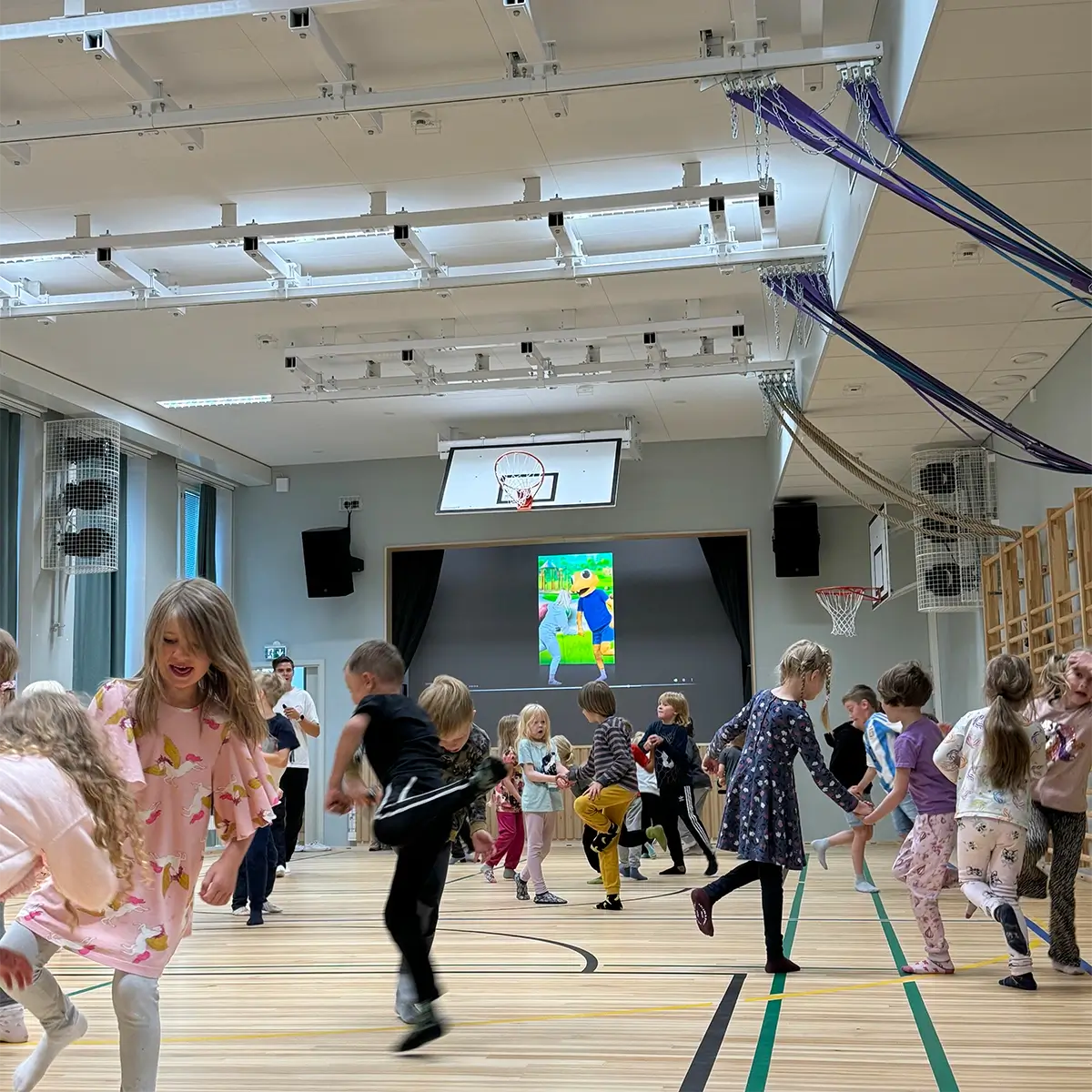
Finland’s education system has made a clear decision: movement belongs in the school day.
That matters. But policy is only the first step. The harder question starts after the law changes: how do schools turn a good idea into a daily routine?
This is where many reforms lose momentum. Not because the direction is wrong, but because implementation is left too abstract.
Schools do not need more slogans about movement. They need a structure that works under everyday conditions.
The article connects national reform to classroom reality: routines, teacher workload, school leadership and the tools needed to make movement sustainable. Read the impact page or Visit the homepage.
The success of a reform is not measured by the law alone. It is measured by whether movement becomes easy to repeat in real classrooms.
Policy Changes Direction — Practice Changes Outcomes
A law can establish responsibility, but it cannot by itself create a better school day.
That work happens in routines: in how lessons are planned, how transitions are handled, how teachers are supported and how movement is made normal rather than exceptional.
If implementation is weak, even a strong reform can remain symbolic.
The real test is whether movement becomes part of daily school life, not just part of official language.
Start With the Ordinary School Day
Schools do not need to rebuild the timetable from scratch to begin. The most realistic starting point is the school day that already exists.
Movement can be built into transitions, before cognitively demanding tasks, after long sitting periods and in moments when the class clearly needs a reset.
The goal is not to create separate movement projects. It is to improve the rhythm of the day students already live.
Implementation works best when it begins with the everyday, not with an idealized plan.
Make Movement Easy for Teachers to Repeat
Teachers are already carrying a full workload. If movement depends on additional planning, invention or preparation, consistency will break down quickly.
That is why successful implementation depends on low-friction routines: short activities, clear timing and support that is easy to use without disrupting the lesson.
The easier a routine is to repeat, the more likely it is to survive beyond initial enthusiasm.
A good movement routine is not the most creative one. It is the one teachers can actually use every day.
Short, Structured Moments Matter Most
Research suggests that movement does not need to be long to be useful. Short, repeated moments during the day can support attention, behaviour and learning readiness.
This matters because schools often assume that meaningful movement requires extra time they do not have.
In practice, smaller moments usually scale better. They are easier to protect, easier to repeat and easier to integrate into teaching.
The point is not to interrupt learning. It is to create better conditions for it.
Continuity Between School and Home Strengthens the Effect
If schools want long-term habits, movement cannot stop at the classroom door.
The strongest models create continuity between school and home, so children experience movement as part of everyday life rather than as something limited to one setting.
That continuity also supports equity. When movement can continue at home through simple guided routines, schools reach beyond the timetable and into the habits that shape children’s development over time.
A school-led habit becomes stronger when it continues across environments.
What Geego Changes in Practice
This is where Geego fits. It helps schools implement movement without asking teachers to build the structure from scratch.
With short guided sessions, ready-to-use routines and continuity into the home, Geego turns movement from an extra idea into something easier to repeat.
That matters because implementation succeeds when support is concrete, not theoretical.
The aim is not to add another program on top of the school day. It is to make daily movement more realistic inside it.
School Leaders and Municipalities Need Scalable Models
For principals and municipalities, the key question is not whether movement matters. It is which solutions can be sustained across classrooms, teachers and schools.
That means looking for models that are easy to adopt, light for teachers, engaging for students and realistic to continue over time.
A reform becomes durable when implementation does not depend on a few highly motivated individuals. It needs a structure that can travel across the whole system.
Scalability is not a technical detail. It is what determines whether a reform reaches every child or only a few classrooms.
Final Thought
Finland’s reform is important because it changes what schools are responsible for.
But responsibility alone is not enough. Schools need repeatable ways to turn movement into an ordinary part of attention, learning and daily rhythm.
That is when policy stops being an announcement and starts becoming a lived experience for children.
Implementation is where the reform becomes real.
Sources
Policy and research sources relevant to this article.
Finlex (2025), Act 245/2025 Amendment to the Finnish Basic Education Act adding the promotion of a physically active lifestyle to the objectives of pre-primary and basic education.
HE 212/2024 Government proposal for amending the Finnish Basic Education Act.
World Health Organization (2020) Guidelines on physical activity, sedentary behaviour and health for children and adolescents.
Donnelly, J. E. et al. (2016) Physical Activity and Academic Achievement.
Watson, A. et al. (2017) Classroom-Based Physical Activity Interventions.
The impact page expands on the wider evidence linking movement, classroom focus, motor development and learning outcomes. Read the impact page.
Explore the research, see how Geego frames impact or start with one class and build movement into the rhythm of everyday learning. Start with your class, Explore the impact page or Back to homepage.