
Movement, learning & child development
Why Motor Skills Matter More Than We Think — And Why Schools Can’t Ignore Them Anymore
Motor skills are not a side topic in child development. They shape focus, confidence, learning readiness and the habits that children carry into adult life.
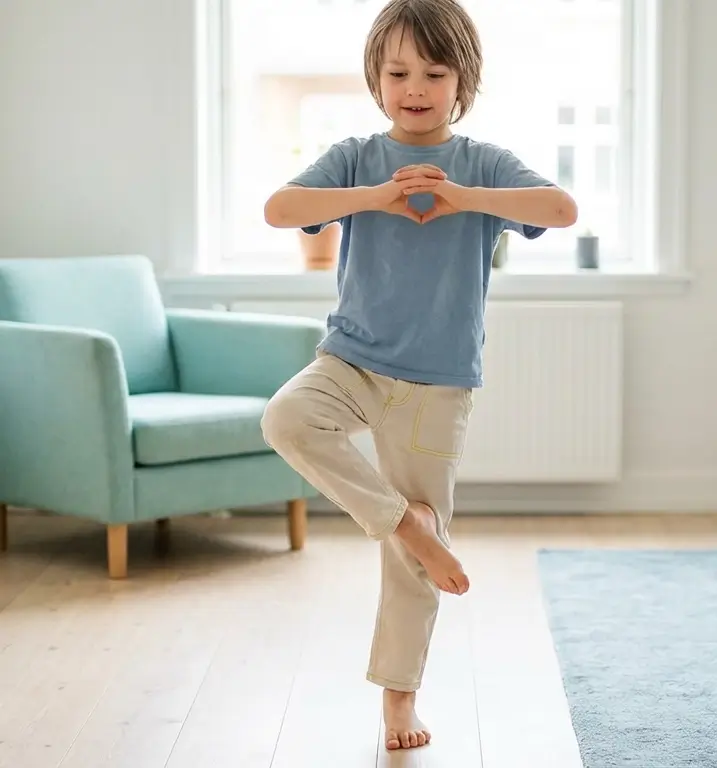
Imagine a dentist.
They work in a confined space, with limited visibility, using precise and controlled hand movements for hours at a time. Every movement matters. Every millimeter counts.
That level of control is not taught overnight. It is built over years, starting in childhood.
And yet we still treat motor skills as if they belonged only to physical education.
They do not. They help form the foundation for how children learn, think and function in the real world.
This article connects directly to how Geego thinks about research, implementation and everyday classroom use. Read the impact page or Visit the homepage.
Movement is not a break from learning. In many cases, it is the condition that makes learning possible.
Motor Skills Are Not Separate From Learning — They Enable It
For years, education has treated physical development and cognitive development as if they were separate tracks. Research keeps showing that they are deeply connected.
Motor competence supports the way children engage with tasks, regulate effort and participate with confidence. It is part of the learning system itself, not a side benefit around it.
Physical activity and academic performance
Research consistently links stronger motor competence with higher levels of physical activity, healthier self-confidence and better academic performance over time.
Children with stronger motor skills are more likely to stay physically active and engaged, while lower motor competence has been associated with weaker outcomes in reading and mathematics.
The implication is clear: movement is not a break from learning. It is a prerequisite for it.
Children Are Moving Less — But Expected to Perform More
Children move less than before, while screen time continues to rise and daily physical activity falls below recommended levels in many countries.
At the same time, schools ask children to sit still longer, focus harder and carry a heavier cognitive load through the day.
That contradiction should concern every educator and policymaker. We cannot reduce movement and still expect stronger attention, better learning outcomes and long-term wellbeing.
If the body is underused, the learning environment starts working against the child.
Even Small Movement Has a Big Impact
One of the most practical findings in education research is that movement does not need to be massive to matter. Even brief activity can change how a classroom functions.
Short movement bursts built into the school day have been shown to support on-task behavior, attention and academic performance.
Brain development and movement
At a neurological level, movement increases blood flow to the brain, supports neural development and strengthens executive function.
That means even a few intentional minutes of movement can help children return to learning with more readiness, not less.
This is not theory. This is biology in action inside the classroom.
Motor Skills Build More Than the Body
When children practice movement, they are not only training muscles or coordination. They are also practicing persistence, resilience and the ability to recover from mistakes.
That process matters because confidence is rarely built through explanation alone. It grows when children try, adjust, improve and feel progress in their own bodies.
Self-regulation and confidence
Research on perceived competence shows that children’s belief in their own ability shapes whether they are willing to engage, persist and improve.
Movement gives children repeated chances to succeed in visible ways, which strengthens self-regulation and makes future learning effort easier to sustain.
Belief is built through action, not instruction.
The Real Problem Isn’t Awareness — It’s Structure
Most schools do not suffer from a lack of awareness. They suffer from fragmented implementation.
Movement is often inconsistent, optional, disconnected from daily routines and rarely supported in ways that continue beyond the school day.
That is why so many interventions disappoint. They are too heavy, too isolated or too short-term to change everyday behavior.
The challenge is not knowing that movement matters. The challenge is building systems that make it happen every day.
What Needs to Change
If motor skills influence learning, if movement improves focus and if small interventions already work, then schools do not need a more complicated theory.
They need better structure: routines that fit real classrooms, support that extends into the home and tools that make movement easy to repeat.
That is also where digital products must be judged. The best ones do not add passive screen time. They guide real-world action and help schools stay consistent.
The solution is not more time. The solution is better structure.
Final Thought
A dentist’s steady hand does not begin in dental school. It begins with balance, coordination and body control in childhood.
Every movement builds something. The real question is whether we are giving children enough opportunities to build those skills every single day.
Schools that want stronger focus and learning outcomes need to treat movement as part of the curriculum, not a break from it.
Sources
Research and guidance cited in this article.
Logan, S. W. et al. (2015) Fundamental Motor Skills and Physical Activity.
van der Fels, I. M. J. et al. (2015) Motor Skills and Cognitive Skills in Children.
Chaput, J.-P. et al. (2020) WHO Physical Activity Guidelines.
Donnelly, J. E. et al. (2016) Physical Activity and Academic Achievement.
Watson, A. et al. (2017) Classroom-Based Physical Activity Interventions.
Harter, S. and Pike, R. (1984) Perceived Competence in Children.
See the impact page for a broader look at how movement, motor competence and classroom outcomes connect in practice. Read the impact page.
Explore the research, see how Geego frames impact or start with one class and turn movement into a daily routine. Start with your class, Explore the impact page or Back to homepage.