

Education policy, movement & learning
Finland Is Making Movement Mandatory in Schools — Here’s Why It Matters
Finland is turning school-day movement from a recommendation into a system responsibility. That shift matters far beyond physical education.
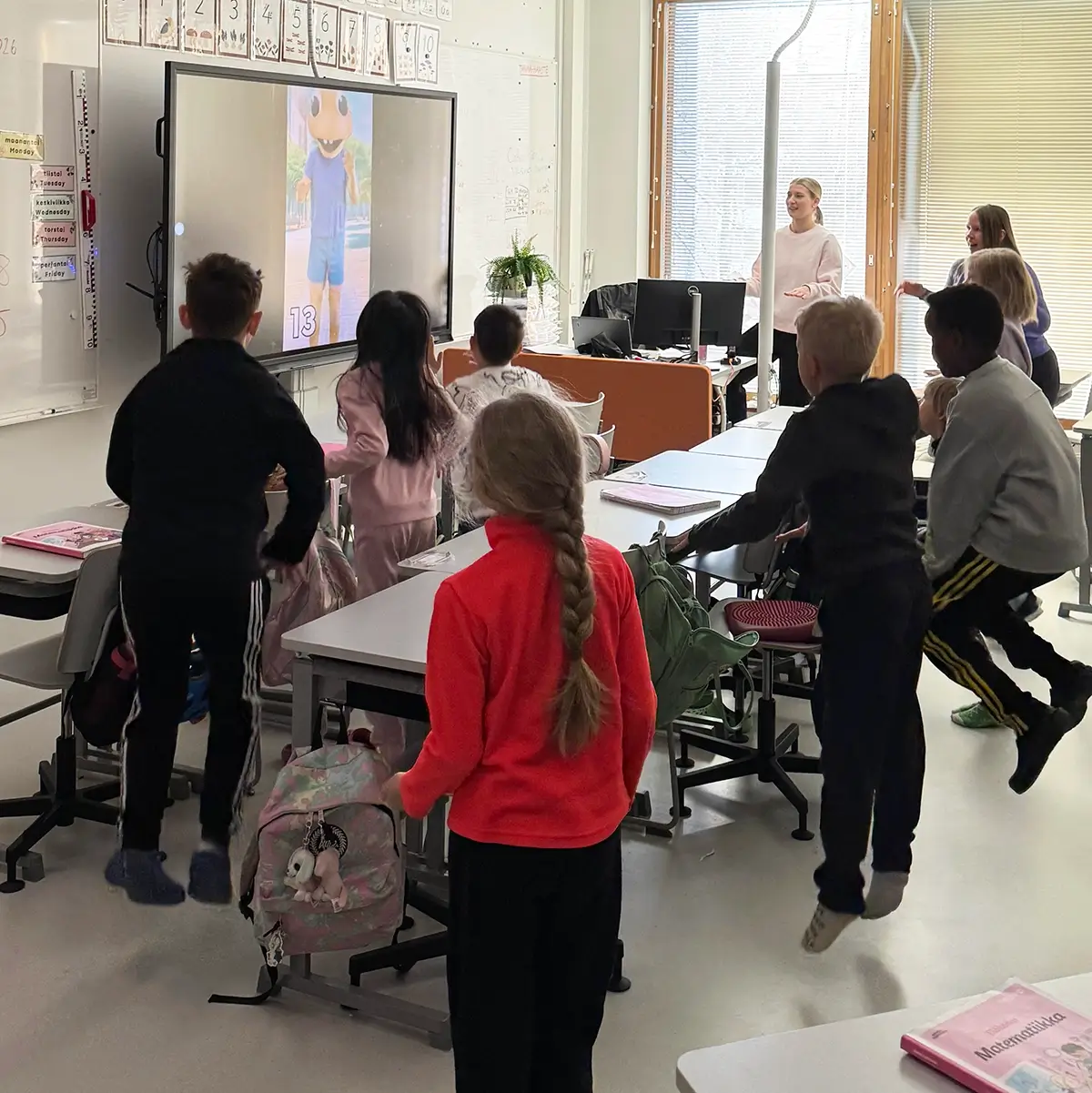
Finland has long been seen as a global leader in education.
Now it is taking a bold step further. A new reform in the Finnish Basic Education Act will make the promotion of a physically active lifestyle a mandatory responsibility for schools.
This is not a minor policy update. It is a signal.
The system is changing.
This article connects a national policy shift to the practical question every school faces next: how daily movement becomes real in classrooms. Read the impact page or Visit the homepage.
When movement becomes part of the system, it changes how the school day is planned, taught and experienced.
Why Finland Is Making This Change
The decision is not happening in isolation. It responds to a clear and growing problem: children are moving less, screen time is increasing and focus and learning readiness are under pressure.
Research has consistently linked physical activity to cognitive development, concentration, academic performance and long-term health outcomes.
What has been missing is not knowledge. It is alignment between what research tells us and what daily school life actually makes room for.
Finland is now closing that gap.
From Recommendation to Responsibility
For years, movement in schools has been encouraged. Now it is becoming obligatory.
That shift matters because there is a fundamental difference between something that is nice to have and something that belongs to the system itself.
When movement becomes part of the system, it shapes how teachers plan their day, how schools structure routines and how learning environments are designed.
This is not about adding more physical education. It is about rethinking the entire school day.
The Real Challenge: Implementation
Policy is the easy part. Practice is harder.
Schools are already under pressure, and teachers do not need more theory layered on top of existing demands. They need tools that work in real classrooms with real time constraints.
The practical questions are now unavoidable: how movement can be integrated without adding workload, how it becomes consistent rather than occasional and how it continues beyond the classroom.
This is exactly where many reforms lose momentum.
Why Daily Structure Matters More Than Occasional Activity
The research is clear: short, repeated movement during the day can have a measurable impact on attention, classroom behaviour and learning outcomes.
But this only works when movement becomes a routine rather than an exception.
One-off activities and short pilots can create interest, but they rarely change behaviour. Daily structure does.
Schools do not need more isolated moments of movement. They need movement built into the rhythm of the day.
Where Geego Fits In
This is the implementation gap Geego is built to solve. Not by adding more complexity, but by making movement easy to start, easy to repeat and easy to sustain.
Geego helps schools with short guided movement sessions, classroom-friendly routines and continuity between school and home.
That matters because movement should not stop when the school day ends. The strongest effects come when habits continue across environments.
The goal is not more activity as an isolated event. It is movement as part of the daily rhythm.
A Signal to the World
This reform is not only relevant for Finland. It is a signal to other countries watching what serious education systems choose to prioritise.
If one of the world’s most respected education systems is making movement a mandatory part of schooling, the discussion changes.
The question is no longer whether this matters. The question becomes why so many systems still behave as if it does not.
Once movement enters the policy core, it becomes harder for the rest of the world to treat it as optional.
Final Thought
Education systems are often slow to change. When they do, it usually reflects something deeper than a short-term trend.
Finland is not simply adding movement to schools. It is acknowledging something fundamental: learning does not happen only in the mind. It happens in the body.
That is why this reform matters — not just for Finland, but for the future of schooling.
Sources
Policy and research sources relevant to this article.
Finlex (2025), Act 245/2025 Amendment to the Finnish Basic Education Act adding the promotion of a physically active lifestyle to the objectives of pre-primary and basic education.
HE 212/2024 Government proposal for amending the Finnish Basic Education Act.
World Health Organization (2020) Guidelines on physical activity, sedentary behaviour and health for children and adolescents.
Donnelly, J. E. et al. (2016) Physical Activity and Academic Achievement.
Watson, A. et al. (2017) Classroom-Based Physical Activity Interventions.
The impact page expands on the broader research linking movement, motor development, attention and learning outcomes. Read the impact page.
Explore the research, see how Geego frames impact or start with one class and make movement part of the school day in practice. Start with your class, Explore the impact page or Back to homepage.