
Focus, movement & classroom readiness
Why Children Struggle to Focus in School — And Why the Problem Starts in the Body
When children lose focus faster, the issue is often framed as motivation or behaviour. In many classrooms, the deeper problem starts earlier — in the body’s readiness to support attention.
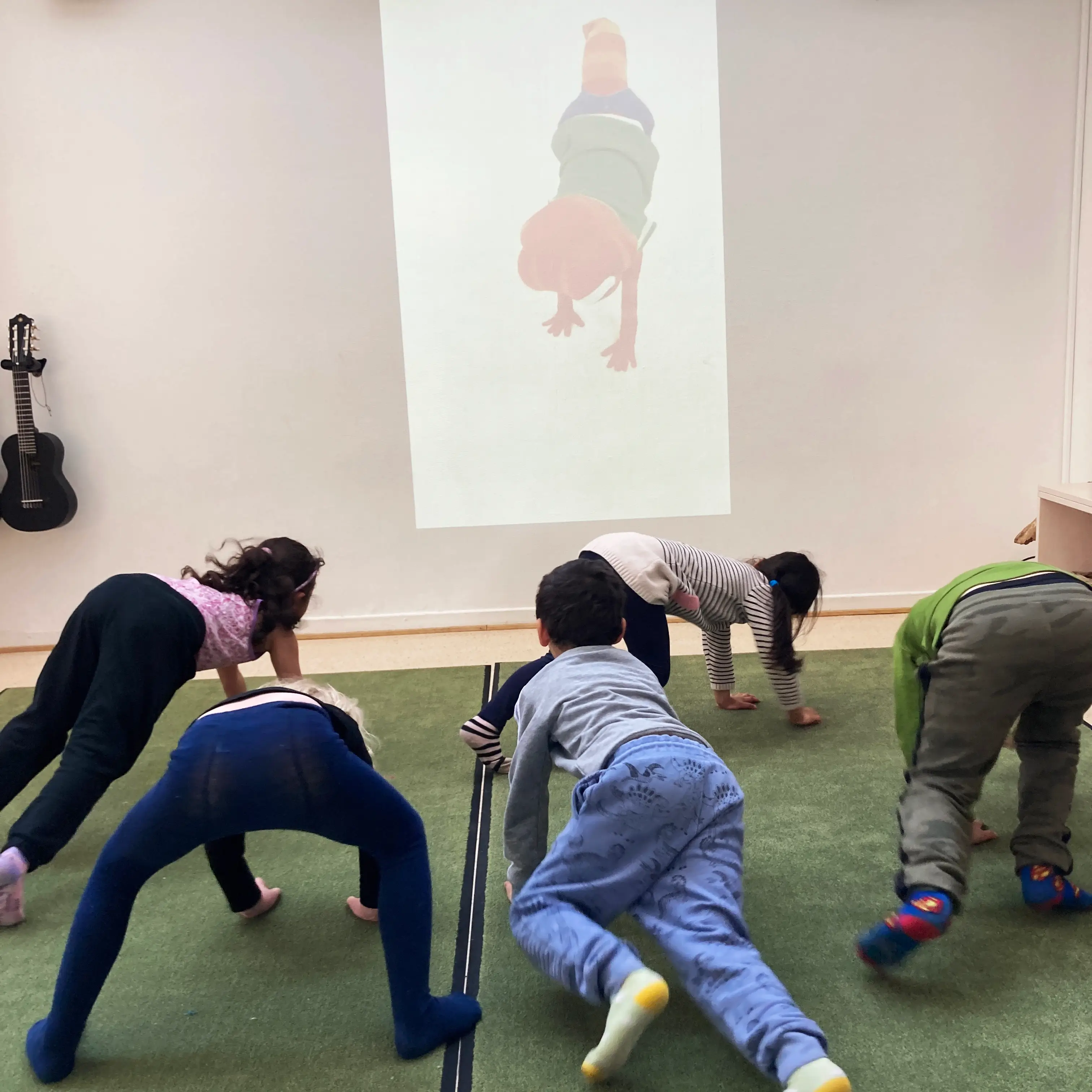
Something has changed in classrooms.
Teachers see it every day. Children lose focus faster, attention breaks more easily and restlessness appears earlier in the lesson.
This is often explained as a motivation problem or a discipline issue. But that explanation may be too narrow.
What if the real reason does not begin in the mind at all? What if it begins in the body?
The article connects classroom attention to movement, routine and implementation — the same themes that shape how Geego approaches impact and daily school use. Read the impact page or Visit the homepage.
Focus is not something we can simply demand from children. It depends on whether the body and brain have the conditions to sustain it.
The Focus Problem Isn’t New — But It’s Getting Worse
Across schools, the same pattern is emerging: shorter attention spans, increased restlessness and more effort required to keep students engaged.
At the same time, children’s daily routines have changed dramatically. There is less physical activity, more sedentary time and more passive screen use than before.
These changes are not separate from what happens in the classroom. They shape it.
What looks like a classroom problem often begins long before the lesson starts.
Focus Is a Physical Skill — Not Just a Mental One
We often think of focus as something purely cognitive, but research points to a broader picture. Attention, self-regulation and learning readiness are strongly influenced by physical activity, movement patterns and brain-body interaction.
Movement increases blood flow to the brain, supports neural activation and improves executive function.
In simple terms, a body that does not move enough struggles to support a mind that is expected to focus for long periods.
Focus is not just a thought process. It is a whole-body condition.
The Contradiction in Modern Classrooms
Children move less than ever before.
Yet we ask them to sit still longer, concentrate harder and process more information.
That creates a mismatch between what the body needs and what the classroom demands. When the mismatch grows, focus starts to break down.
What appears as inattention may actually be low physical readiness.
Why Traditional Solutions Fall Short
When focus declines, the response is often more structure, stricter rules or tighter control.
Those approaches may manage the symptom for a moment, but they do not solve the cause if the underlying issue is lack of movement, low physical activation or reduced readiness.
Discipline matters, but discipline alone cannot compensate for a body that has not had enough opportunity to move.
If the cause is physical underactivation, control by itself will always be an incomplete solution.
The Missing Link: Movement During the School Day
Research shows that even short bursts of movement can improve attention, on-task behaviour and classroom engagement.
But the critical condition is consistency. Movement helps most when it happens regularly, not as a rare intervention.
That is the difference between an activity and a support system.
The question is not whether movement helps focus. The question is whether it happens often enough to matter.
From Occasional Activity to Daily Routine
This is where many schools struggle. Movement is often optional, inconsistent and dependent on individual teachers.
That means it never becomes part of the system.
And without consistency, there is no lasting impact.
Routine changes behaviour. Occasional good intentions rarely do.
How Geego Supports Focus in Practice
This is exactly the gap Geego is designed to address. Instead of asking teachers to create movement moments from scratch, Geego provides ready-to-use guided sessions and short, structured activities.
Teachers can introduce movement instantly, at the right moment and without interrupting the flow of the lesson.
The result is not less learning time, but better learning time: children return to the task with more readiness, steadier attention and stronger classroom rhythm.
The goal is not interruption. It is better conditions for learning.
Extending Focus Beyond the Classroom
Focus is not built in one environment alone. It is shaped across the whole day, which is why what happens at home matters as much as what happens at school.
Geego extends movement into the home by using devices children already have, turning screen time into active engagement and creating continuity between school and home.
In practice, children continue, siblings join and parents participate. What starts as a classroom intervention can become a family habit.
The strongest routines are the ones that do not end when the school bell rings.
Final Thought
We often ask why children cannot focus anymore.
A better question may be whether we are creating the conditions that make focus possible.
Focus is not something we simply demand. It is something we build, through movement, readiness and daily rhythm.
And for many children, that process starts in the body.
Sources
Research and guidance relevant to attention, movement and classroom readiness.
World Health Organization (2020) Guidelines on physical activity, sedentary behaviour and health for children and adolescents.
Chaput, J.-P. et al. (2020) Evidence and guidance on movement, sedentary behaviour and child development.
Donnelly, J. E. et al. (2016) Physical Activity and Academic Achievement.
Watson, A. et al. (2017) Classroom-Based Physical Activity Interventions.
Logan, S. W. et al. (2015) Fundamental Motor Skills and Physical Activity.
The impact page expands on how movement, motor development, concentration and classroom outcomes connect in practice. Read the impact page.
Explore the research, see how Geego frames impact or start with one class and make movement part of how focus is supported every day. Start with your class, Explore the impact page or Back to homepage.